A German court ruled ChatGPT infringed on song lyrics
Munich's Regional Court found OpenAI liable for reproducing GEMA lyrics; OpenAI has appealed, and a Suno ruling followed in 2026.
- Historical event
- November 11, 2025
- First source published
- November 11, 2025
- Site publication
- September 18, 2026
What happened
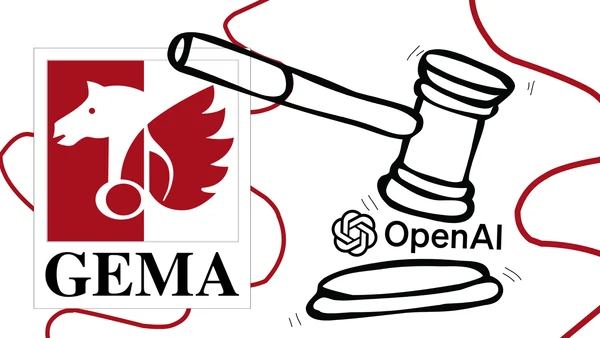
On 11 November 2025 the Munich Regional Court ruled against OpenAI in a case brought by GEMA, the German collecting society for composers, lyricists and publishers. GEMA's own account of the judgment describes it as "Europe's first landmark ruling" applying copyright law to a generative AI system's outputs. The case concerned song lyrics by German lyricists and songwriters in GEMA's repertoire that GEMA said ChatGPT would reproduce in response to simple prompts.
What the documents say
According to GEMA's statement, the court held that "OpenAI should have acquired the rights to the relevant song lyrics... in order to use them for the purpose of training and operating ChatGPT," and found that "the ChatGPT systems contain copies of the original works, which are reproduced and made available in response to simple prompts by users." GEMA's statement records the court rejecting an argument that the EU's text-and-data-mining exception covers this use, reasoning that storing and outputting the protected lyrics goes beyond mining for analysis. As GEMA is a party announcing its own win, this is not a neutral report, but the specific holdings quoted are attributed to the ruling rather than to GEMA's advocacy. GEMA's later statement on a separate case confirms OpenAI has since appealed to the Munich Higher Regional Court, so the ruling is not final as of retrieval. That same statement reports a further ruling against Suno, over training on recordings rather than lyrics, on 31 July 2026, which GEMA calls a second victory but which concerns a different mechanism and is not the subject of this record.
Why it matters for makers
The distinction the court drew, between a model trained on protected material and a model that then stores and reproduces recognisable extracts of it on request, separates two different legal exposures. A generator that merely learned statistical patterns from lyrics is a different question from one that can be prompted to output those lyrics close to verbatim; this case is about the latter mechanism specifically.
What to check before you use it
Before using a text or lyric generator's output commercially, test whether it reproduces identifiable, extended phrases from known songs rather than only stylistic patterns; the German court's finding turned on reproduction, not mere influence. Treat this as a first-instance ruling under appeal, not a settled EU-wide rule, since the appellate outcome is not yet recorded in these sources.
- Does the tool I am using output extended, recognisable phrases from existing lyrics, rather than only a style or structure?
- Has the provider I am using stated a licensing policy for lyric or text content, comparable to the one GEMA has offered AI providers since September 2024?
- Is the case I am relying on for legal comfort final, or still under appeal as this one is?
A first-instance ruling from one member state's court establishes what that court found on this record, not a Europe-wide precedent; the appeal outcome will matter more than this judgment alone.
Sources & reading trail
GEMA's own account of the Munich Regional Court's ruling and quoted holdings on lyric reproduction and licensing obligation.
Source published: 11 November 2025 · Retrieved: 16 September 2026
Confirms OpenAI has appealed the November 2025 ruling to the Munich Higher Regional Court and reports a separate, later ruling against Suno.
Source published: 31 July 2026 · Retrieved: 16 September 2026
Papers, terms and official documents establish the record; the maker reading and the checks are Signal to Song editorial analysis. This retrospective draft does not imply the site published on the event date.
Continue reading
- Record labels sued Suno and Udio over training data
- EU law now makes AI model makers disclose training summaries
- Browse the complete the archive
Sources & reading trail
- Europe's first landmark ruling on AI: GEMA prevails against OpenAI
Source published: November 11, 2025 · Retrieved: September 16, 2026 - GEMA prevails over Suno
Source published: July 31, 2026 · Retrieved: September 16, 2026
The documents above establish the record. The reading and the questions are this publication’s editorial analysis, written after the fact.
Published September 18, 2026, not on the date of the event described.