Record labels sued Suno and Udio over training data
The complaints allege mass copying of recordings to train two generators; both cases outlasted two later label settlements.
- Historical event
- June 24, 2024
- First source published
- June 24, 2024
- Site publication
- September 18, 2026
What happened
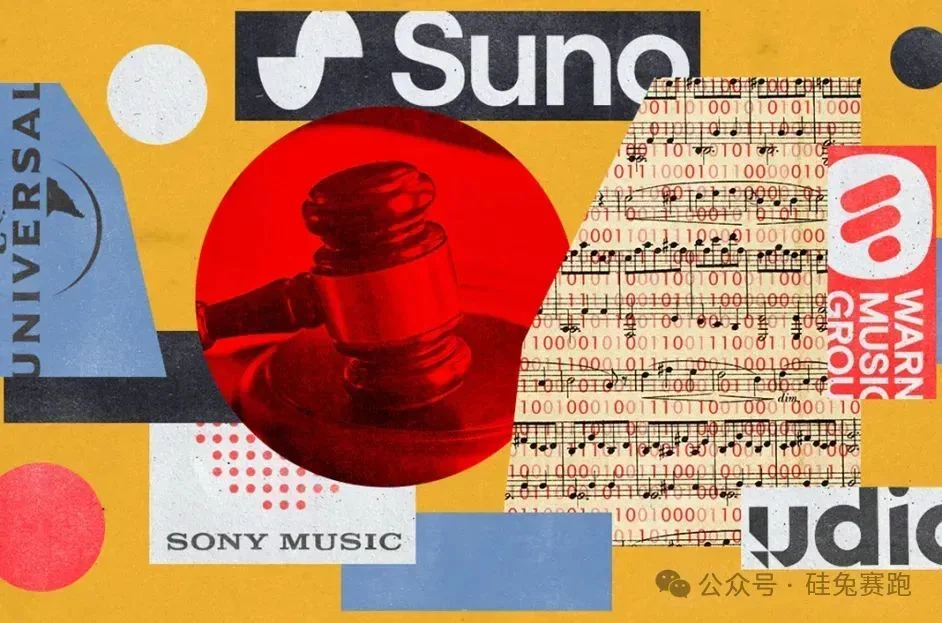
On 24 June 2024 the RIAA announced that major record companies had filed two copyright infringement suits against AI music generators: the case against Suno, Inc. in the District of Massachusetts and the case against Uncharted Labs, Inc. (Udio) in the Southern District of New York. The named plaintiffs were Sony Music Entertainment, UMG Recordings and Warner Records. The announcement states the suits sought declarations of infringement, injunctions and damages.
What the documents say
These are allegations, not findings. The RIAA's announcement quotes the complaints stating that building the services "requires at the outset copying and ingesting massive amounts of data" and that it is "obvious what [the services are] trained on," given the recognisable sound of certain outputs. Suno and Udio have publicly disputed that framing elsewhere as fair use; the complaints reject that defence, but no court ruling on it appears in these sources. The public docket for UMG Recordings, Inc. v. Suno, Inc. and for UMG Recordings, Inc. v. Uncharted Labs, Inc. show neither case formally terminated as of 16 September 2026, even though Universal Music Group announced a settlement and licensing deal with Udio in October 2025 and Warner Music Group announced a settlement with Suno in November 2025. Sony Music Entertainment and UMG Recordings remained active parties objecting to a discovery ruling in the Suno docket as recently as April 2026, in a dispute that specifically concerned Suno's licensing arrangement with Warner.
Why it matters for makers
The underlying legal question, whether training a generative model on copyrighted recordings without a licence is infringement or fair use, remains unresolved by any final judgment described in these sources. That matters to a working musician because it shapes what a licensed successor platform will look like, and because an unresolved question about a tool's own legal footing is a risk that sits upstream of anything made with it.
What to check before you use it
Do not assume a settlement with one label clears a platform's use of another label's catalogue for training; the docket shows claims can continue label by label after a partial settlement. Read a platform's own account of what changed after a settlement, since terms of service and available features change alongside the legal position.
- Which labels, if any, has this platform settled or licensed with, and which remain in litigation against it?
- Does the platform's current terms of service describe the training data as licensed, or is that still contested?
- If I release a track made on this tool, does its legal exposure become mine as well as the platform's?
Two settlements have not closed the underlying cases; treat the litigation as live and label-specific rather than resolved, and recheck a platform's status before relying on it commercially.
Sources & reading trail
RIAA's own announcement of the filing, naming plaintiffs and courts and quoting the complaints' allegations.
Source published: 24 June 2024 · Retrieved: 16 September 2026
Public docket showing no termination date and an April 2026 discovery dispute over Suno's Warner licence, evidencing the case remained open for non-settling plaintiffs.
Source published: Not established · Retrieved: 16 September 2026
Public docket confirming the case's filing date and parties, with no recorded termination date as of retrieval.
Source published: Not established · Retrieved: 16 September 2026
Papers, terms and official documents establish the record; the maker reading and the checks are Signal to Song editorial analysis. This retrospective draft does not imply the site published on the event date.
Continue reading
- A label settled with Udio and announced a licensed platform
- Warner Music settled with Suno for a licensed platform
- Suno assigns song ownership only on its paid tiers
- Browse the complete the archive
Sources & reading trail
- Record Companies Bring Landmark Cases for Responsible AI Against Suno and Udio in Boston and New York Federal Courts, Respectively
Source published: June 24, 2024 · Retrieved: September 16, 2026 - UMG Recordings, Inc. v. Suno, Inc. (Docket No. 1:24-cv-11611, D. Mass.)
Retrieved: September 16, 2026 - UMG Recordings, Inc. v. Uncharted Labs, Inc. (Docket No. 1:24-cv-04777, S.D.N.Y.)
Retrieved: September 16, 2026
The documents above establish the record. The reading and the questions are this publication’s editorial analysis, written after the fact.
Published September 18, 2026, not on the date of the event described.