Now and Then used separation, not generation, to finish a demo
Apple Corps says machine-learning source separation freed John Lennon's 1970s vocal from his piano so The Beatles could finish the song.
- Historical event
- November 2, 2023
- First source published
- November 1, 2023
- Site publication
- September 18, 2026
What happened
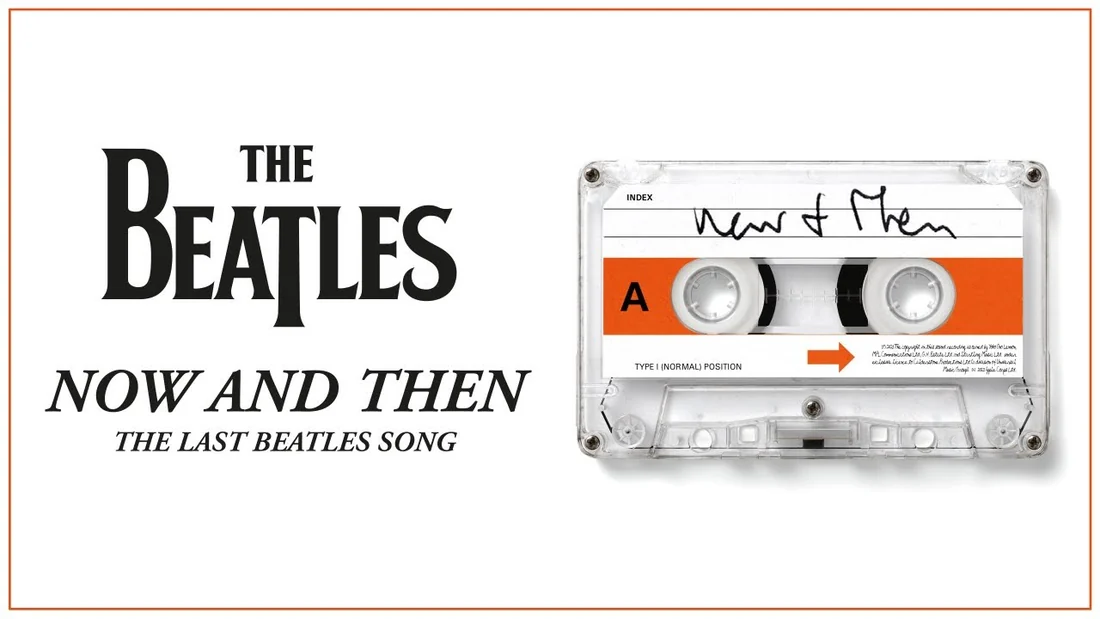
On 2 November 2023, The Beatles released 'Now and Then', described in the band's own promotional material as the group's last new recording. The underlying vocal was a home cassette demo John Lennon recorded in the late 1970s, first attempted for the 1995 Anthology project and abandoned then because the vocal could not be cleanly separated from Lennon's piano part on the tape. The completed track credits all four Beatles as contributors, with Paul McCartney and Ringo Starr recording new parts and archived material from George Harrison's 1995 sessions.
What the documents say
The official short film 'The Last Beatles Song', published by Apple Corps on the band's own YouTube channel on 1 November 2023, states that 'a software system developed by Peter Jackson and his team, used throughout the production of the documentary series Get Back, finally opened the way for the uncoupling of John's vocal from his piano part' in 2022, after which 'the original recording could be brought to life and worked on anew with contributions from all four Beatles'. That is a specific, named mechanism: machine-learning audio source separation, isolating an existing performance, not a system generating a new one. The official audio upload, copyrighted to Apple Corps Limited and published a day later on 2 November 2023, confirms the release date and credits the recording as a 2023 mix of the original performance.
Why it matters for makers
The distinction between separation and generation is the entire editorial point here, and it has direct technical relevance for anyone working with old session tape or a single bleed-heavy microphone: source-separation tools recover a performance that already exists, at whatever fidelity the isolation permits, rather than inventing one. A restored 1970s cassette vocal is not equivalent in kind to a prompted vocal from a text-to-music model, even though both may involve machine learning somewhere in the chain — the source material and the authorship claim are entirely different.
What to check before you use it
When separation technology recovers a performance for release, a maker should document the original recording's provenance and date, credit the separation and restoration work distinctly from the original performance, and be explicit in metadata or liner notes about which parts are archival and which are new — the approach the official material for this release itself demonstrates by naming Peter Jackson's team's role directly.
- Is the AI step separating an existing performance, or generating a new one?
- Is the original recording's date and provenance documented anywhere public?
- Does the credit distinguish the restoration technique from the original performer's work?
'Now and Then' is frequently cited as an example of 'AI in music', which risks collapsing a real distinction: the technology here recovered Lennon's own performance rather than replacing it, and the band's own account is careful to describe the process in exactly those terms.
Sources & reading trail
Apple Corps's own description of the machine-learning vocal-separation technique used to complete the recording.
Source published: 1 November 2023 · Retrieved: 16 September 2026
Apple Corps Limited's official release, confirming the 2 November 2023 release date and rights holder.
Source published: 2 November 2023 · Retrieved: 16 September 2026
Papers, terms and official documents establish the record; the maker reading and the checks are Signal to Song editorial analysis. This retrospective draft does not imply the site published on the event date.
Continue reading
- Open source made stem separation common but not a rights grant
- Music’s AI credit standard is still being built by DDEX
- Browse the complete the archive
Sources & reading trail
- The Beatles - Now And Then - The Last Beatles Song (Short Film)
Source published: November 1, 2023 · Retrieved: September 16, 2026 - The Beatles - Now And Then (Official Audio)
Source published: November 2, 2023 · Retrieved: September 16, 2026
The documents above establish the record. The reading and the questions are this publication’s editorial analysis, written after the fact.
Published September 18, 2026, not on the date of the event described.