IFPI recorded a ninth year of recorded-music revenue growth
IFPI's 2024 report documents 10.2% revenue growth in 2023 and names generative AI as a risk fans and the industry want managed responsibly.
- Historical event
- March 21, 2024
- First source published
- November 27, 2023
- Site publication
- September 18, 2026
What happened
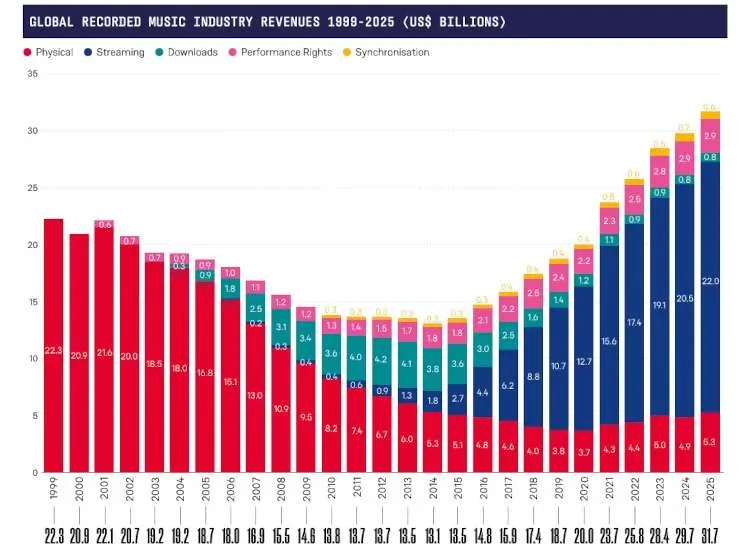
On 21 March 2024, IFPI, which represents the recording industry worldwide, published its Global Music Report, stating that global recorded-music trade revenues grew 10.2% in 2023 to US$28.6 billion, a ninth consecutive year of growth. The report states paid subscriptions passed 500 million globally for the first time, that subscription streaming revenue grew 11.2% and made up 48.9% of the market, and that physical revenue grew 13.4% for a third consecutive year of simultaneous digital and physical growth. Every one of IFPI's seven regions posted growth, led by Sub-Saharan Africa at 24.7%.
What the documents say
The revenue report itself addresses AI in a single quoted passage: IFPI's then Chief Legal Officer, Lauri Rechardt, is quoted naming “the threat from the abuse of generative artificial intelligence if it is not developed responsibly and with respect for artists' and labels' rights” alongside streaming fraud and piracy as ongoing challenges. A separate, earlier IFPI document, its Engaging with Music 2023 findings on AI published 27 November 2023 from a survey of more than 43,000 fans in 26 countries, adds specific figures: 79% of fans said human creativity remains essential to music, 76% said an artist's music or vocals should not be used or ingested by AI without permission, and 73% said an AI system should clearly list any music it used or trained on.
Why it matters for makers
The report measures trade revenue at the wholesale level reported by record companies, not listener sentiment or platform policy; the AI reference is a single framing sentence within a financial report, and the fan-attitude figures come from a different, survey-based document. Conflating the two risks overstating what either establishes: the revenue report does not measure AI's market impact, and the survey does not measure revenue. Taken together, they document an industry body reporting sustained financial growth while its own commissioned fan research shows consent and transparency, not AI use itself, as what listeners say they care about most.
What to check before you use it
This is an editorial reading. When citing either document, name which one and which period: the 10.2% figure is 2023 trade revenue reported in March 2024, and the fan-attitude percentages are from a survey reported in November 2023, not from the revenue report itself. Do not present IFPI's AI framing as a policy or rule; it is a quoted position within a press release, not a standard or requirement.
- Are you citing the revenue figure or the fan-survey figure, and have you kept their different reporting periods separate?
- Does your own release practice reflect the specific consent and transparency expectations the survey documents, rather than a general sense that “fans want authenticity”?
- Have you checked for a newer IFPI Global Music Report before citing 2023 figures as current?
IFPI's growth figures and its fan-attitude survey are separate documents answering separate questions, and the report's single sentence on AI is best read as a statement of industry concern rather than as evidence of any specific policy response.
Sources & reading trail
States the 10.2% revenue growth figure, regional breakdowns, subscription milestone, and the quoted AI framing.
Source published: 21 March 2024 · Retrieved: 16 September 2026
Supplies the Engaging with Music 2023 survey figures on fan attitudes to AI consent, cloning and transparency.
Source published: 27 November 2023 · Retrieved: 16 September 2026
Papers, terms and official documents establish the record; the maker reading and the checks are Signal to Song editorial analysis. This retrospective draft does not imply the site published on the event date.
Continue reading
- Streaming brought in 84% of US recorded music revenue in 2023
- Spotify publishes Loud and Clear as its own royalty evidence
- Music groups published seven AI principles together
- Browse the complete the archive
Sources & reading trail
- IFPI Global Music Report: Global Recorded Music Revenues Grew 10.2% In 2023
Source published: March 21, 2024 · Retrieved: September 16, 2026 - Music fans worldwide believe human creativity essential in time of AI
Source published: November 27, 2023 · Retrieved: September 16, 2026
The documents above establish the record. The reading and the questions are this publication’s editorial analysis, written after the fact.
Published September 18, 2026, not on the date of the event described.