Melodyne's DNA opened single notes inside a recorded chord
Celemony's own 2008 announcement and 2009 rollout timeline document how Direct Note Access made polyphonic audio editable note by note.
- Site publication
- September 18, 2026
What happened
In 2008, the German company Celemony introduced a technology it called Direct Note Access, describing it on an archived 2008 product page as technology that 'makes the impossible possible: for the first time in audio recording history you can identify and edit individual notes within polyphonic audio material.' The same page marks the claim 'patent pending' and lists the technology as coming soon in the company's Melodyne plugin. A follow-up page, Celemony's Direct Note Access: Facts and Fiction, dates the technology's 'world premiere' to the Musikmesse Frankfurt trade fair in 2008 and states that 'the first product featuring DNA technology will be our Melodyne editor which we plan to release in 2009.'
What the documents say
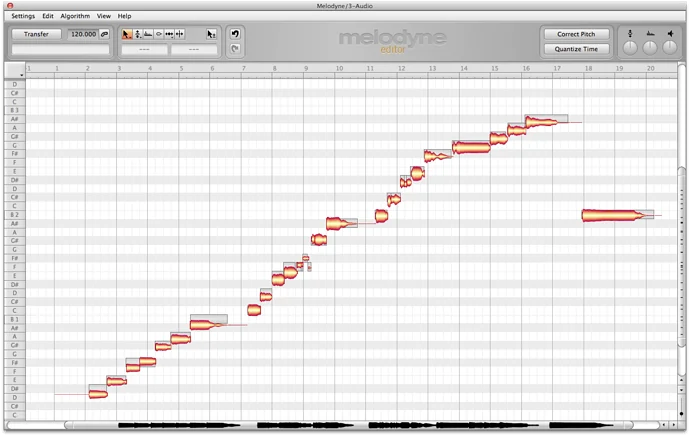
Before DNA, the Facts and Fiction page explains, Melodyne's pitch and timing editing only worked on monophonic material, a single melodic line from one voice or instrument. A chord recorded as audio, it says, 'always ended up as a single blob, permitting no access to the individual tones.' DNA's contribution was a detection process tuned for recordings of single polyphonic instruments, piano and guitar are the examples given, that separates a chord's component notes so each becomes individually selectable and editable, for pitch and timing, after the fact. Celemony's current product page still frames this as the software's core distinction: the ability to manipulate polyphonic instruments such as piano and guitar at the level of the individual note. Read together, the 2008 announcement and the current page describe the same underlying claim: individual notes inside a chord, not just the chord as a whole, became addressable objects.
Why it matters for makers
The mechanism to hold onto is separation of a polyphonic signal into note-level objects after recording, distinct from correcting a monophonic vocal or lead line. A guitarist who recorded a strummed chord with one out-of-tune string, or an arranger testing a major chord as a minor without re-tracking, is relying on this capability, not general pitch correction. Recognising DNA-style note separation as its own category clarifies what a given tool can and cannot do to a finished polyphonic take.
What to check before you use it
Because Celemony's own 2008 material names piano and guitar specifically, a maker applying note-level editing to other polyphonic sources should check current documentation for which instruments the detection is validated against, rather than assume uniform accuracy across all polyphonic audio. This is an editorial extension of what the company's own materials specify.
- Is the polyphonic source I am editing one the tool's documentation names as supported, or an untested edge case?
- Am I correcting a genuine error, or removing a performance nuance that was intentional?
- If I change a chord's quality after the fact, does that change need disclosing to a collaborator who played the original take?
Before 2008, a recorded chord was a fixed object; Celemony's own materials describe the point at which that stopped being true, and the distinction between editing a whole chord and editing one note inside it is still the one worth keeping straight.
Sources & reading trail
Celemony's own 2008 announcement describes Direct Note Access as new technology for editing individual notes in polyphonic audio, marked 'patent pending'.
Source published: Not established · Retrieved: 16 September 2026
States the DNA technology's world premiere at Musikmesse Frankfurt 2008 and that the first DNA-equipped Melodyne editor was planned for release in 2009.
Source published: Not established · Retrieved: 16 September 2026
Current description of Direct Note Access's ability to edit notes within polyphonic recordings, retrieved 16 September 2026.
Source published: Not established · Retrieved: 16 September 2026
Papers, terms and official documents establish the record; the maker reading and the checks are Signal to Song editorial analysis. This retrospective draft does not imply the site published on the event date.
Continue reading
- An oil-industry pitch algorithm was patented as a vocal corrector
- Ozone's assistant still leaves the final call to the engineer
- Open source made stem separation common but not a rights grant
- Browse the complete the archive
Sources & reading trail
- Direct Note Access (archived Celemony announcement)
Retrieved: September 16, 2026 - Direct Note Access: Facts and Fiction (archived)
Retrieved: September 16, 2026 - What is Melodyne
Retrieved: September 16, 2026
The documents above establish the record. The reading and the questions are this publication’s editorial analysis, written after the fact.
Published September 18, 2026, not on the date of the event described.