Moises ties stem separation to a cover song's own rights
Moises documents licensed training data and puts the burden of clearing a cover's underlying song on the user.
- Site publication
- September 18, 2026
What happened
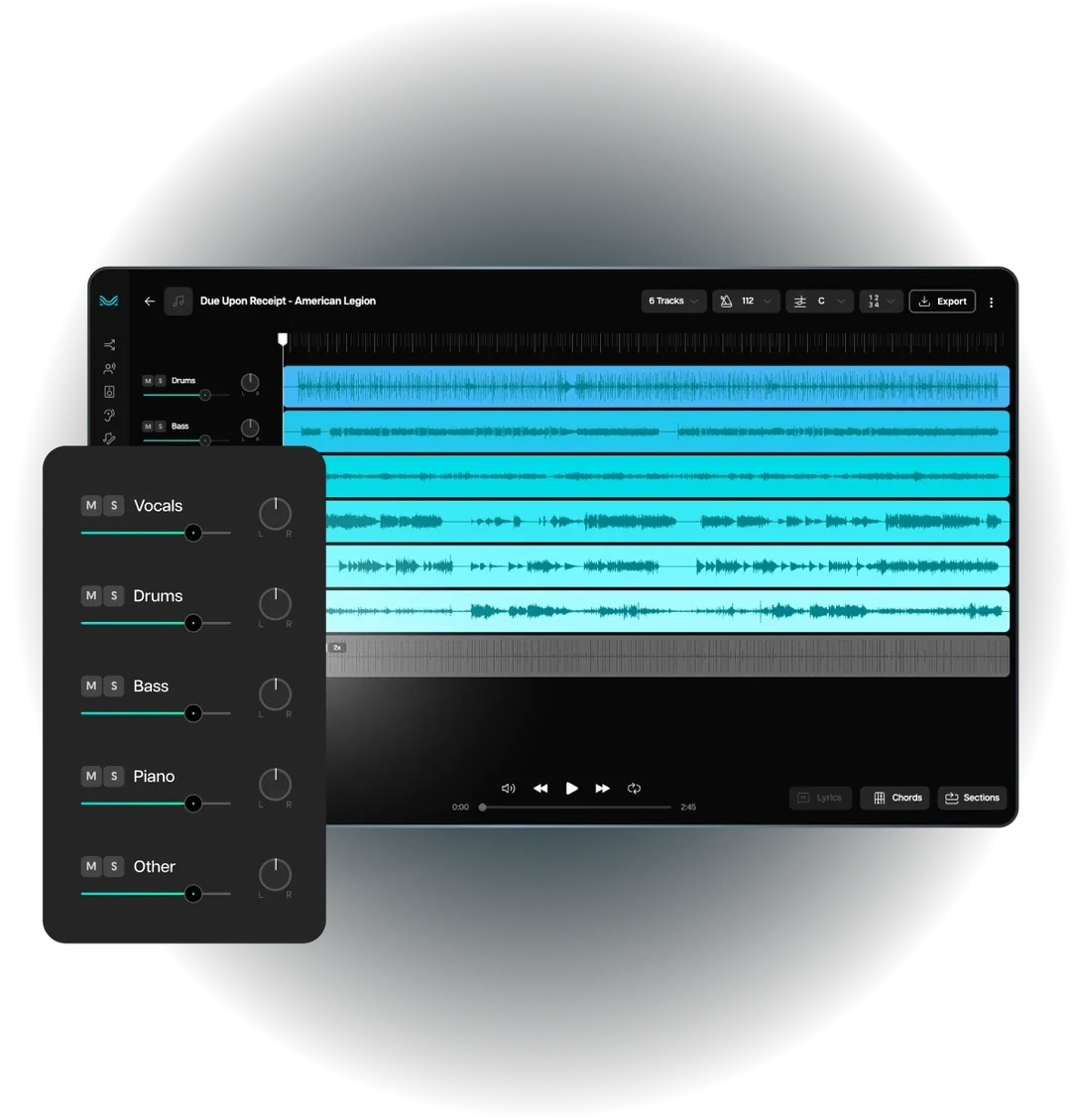
Moises is a consumer app that combines stem separation with practice tools: chord and key detection, tempo and pitch change, and a metronome, built around uploaded or recorded audio. The company's own site, retrieved 16 September 2026, describes separating 'vocals, drums, bass, guitar, keys, and more from any audio file' into as many as 27 stem types, positioning the app for musicians who 'practice, perform, create and collaborate'.
What the documents say
On training data, Moises states plainly: 'Moises will never train on your data', and separately, 'Moises only trains our models on licensed materials. We never train on any music without the owner's full approval.' Those are two different claims worth keeping apart: the first is about a user's own uploads, the second about the material used to build the separation model itself. The Terms of Service, also retrieved 16 September 2026, add a specific rights clause: 'if you wish to perform a cover song and Submit it to the Service...you are responsible for securing all rights in and to the underlying musical work before Submitting'. The same terms confirm a user 'retain(s) all rights, title, and interest' in uploaded content and in the output generated from it.
Why it matters for makers
The mechanism is separation, not licensing. Splitting a recording into stems changes what you can hear and edit; it does not change who owns the composition or the master you separated it from. The terms' cover-song clause makes that explicit for the most common ambiguous case: recording yourself performing someone else's song. A mechanical licence for a cover, or direct permission from the rights holder, is a separate step the app does not perform on a user's behalf, regardless of how the audio is subsequently processed.
What to check before you use it
Before uploading a commercial recording, confirm whether you have any rights in it at all, since separating stems from a track you neither wrote nor licensed does not create rights you didn't have. Before distributing a cover built from separated or re-arranged stems, secure a mechanical licence or the rights holder's permission, as the terms require. Read which specific claim about training data applies to a given feature, since 'never train on your data' and 'only trains on licensed materials' describe different parts of the system. This is editorial emphasis; the terms state the obligations but do not walk through how to satisfy them.
- Do you hold, or can you obtain, rights in the original recording before you separate it?
- If this is a cover, have you secured a mechanical licence for the underlying song?
- Are you relying on a training-data claim that actually covers the feature you're using?
A separation tool sits between the recording and the rights that govern it, not above them; the terms put that burden back on the person submitting the file, cover song or otherwise.
Sources & reading trail
States separation capability and training-data claims for user uploads and licensed model training.
Source published: Not established · Retrieved: 16 September 2026
States a user retains rights in uploaded content and output, and requires users to secure rights for cover songs before submission.
Source published: Not established · Retrieved: 16 September 2026
Lists specific features including stem separation, chord/key detection, and pitch/tempo tools.
Source published: Not established · Retrieved: 16 September 2026
Papers, terms and official documents establish the record; the maker reading and the checks are Signal to Song editorial analysis. This retrospective draft does not imply the site published on the event date.
Continue reading
- Open source made stem separation common but not a rights grant
- Get a license or do not sample, a court held in 2005
- Browse the complete the archive
Sources & reading trail
- Moises
Retrieved: September 16, 2026 - Terms of Service
Retrieved: September 16, 2026 - Moises Features
Retrieved: September 16, 2026
The documents above establish the record. The reading and the questions are this publication’s editorial analysis, written after the fact.
Published September 18, 2026, not on the date of the event described.