The Copyright Office found prompts do not control output
The Office’s Part 2 report and two generators’ own documentation show why a prompt describes an idea but does not direct its expression.
- First source published
- January 29, 2025
- Site publication
- September 18, 2026
What happened
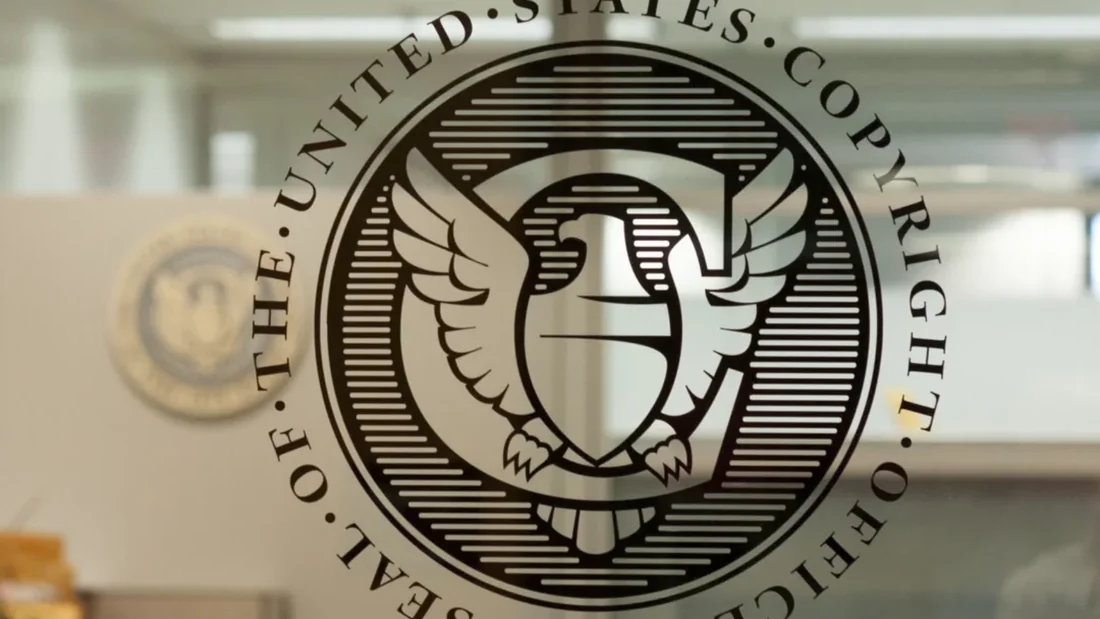
In a report dated 29 January 2025, the U.S. Copyright Office’s Part 2 report on copyrightability concluded that, given current technology, prompts alone do not give a user enough control over an AI system’s output to make that person the work’s author. The finding was not abstract: the report records that Universal Music Group told the Office, in comments about the music industry specifically, that a person prompting a music generator is “no more an author than someone who tells a musician friend to ‘write me a pretty love song in a major key’ and then falsely claims co-ownership.” Separately, the report itself quotes Udio’s own guide to its service, which told users that “no matter how detailed” a prompt is, “the same text describes an infinite number of possible” results.
What the documents say
The report treats a prompt as an instruction that conveys an unprotectable idea, not an expression. Two pieces of evidence carried the reasoning: identical prompts can return different outputs, and revising a prompt repeatedly is, in its words, closer to “re-rolling” dice than exercising control. Suno’s Song Editor announcement, retrieved 16 September 2026, shows the same gap from the maker’s side: a June 2025 post separates the prompt that “start[s] riffing” from the manual editing where, it says, “the real magic happens” – the prompt is a starting point, not a finished instruction. Udio’s guide to creating a first song similarly describes each prompt as producing two songs to choose between, not one determined result.
Why it matters for makers
The mechanism is that authorship requires control over how an idea becomes expression, not just the idea. A songwriter dictating a lyric to a session singer keeps authorship because they direct phrasing and delivery in real time. A prompt cannot do that, because the system, not the person, resolves the gap between instruction and sound. Closing that gap afterwards – through arranging, editing stems, adding performance – is what gives a track a maker’s own authorship rather than only the generator’s.
What to check before you use it
This is editorial reading of the report, not legal advice: treat a bare generation as a sketch, not a master. Before registering or releasing a prompted track, identify which elements were added or arranged by a human after generation, since that is the material the Office’s guidance says can be claimed. Read a generator’s documentation for how much the interface lets a user shape structure or lyrics beyond the prompt, since that capability – not the prompt’s length – is what changes the analysis.
- Which parts of this track came from arranging or editing, rather than from the prompt itself?
- Could a different person entering the same prompt have received a materially different result?
- Does the generator’s documentation describe any control finer than a text description?
None of this forecloses using a generator as a tool; it only relocates where authorship has to be shown. As both the Office and the platforms describe their systems, the prompt is the idea, and what turns it into a specific record is decided somewhere else.
Sources & reading trail
Finds prompts alone insufficient for authorship and quotes UMG's and Udio's own statements about music prompting specifically.
Source published: 29 January 2025 · Retrieved: 16 September 2026
Describes Udio's prompt-to-song process, including that each prompt returns two songs to choose between.
Source published: Not established · Retrieved: 16 September 2026
Distinguishes the prompt that starts a generation from the manual editing Suno describes as where its Song Editor's control happens.
Source published: 3 June 2025 · Retrieved: 16 September 2026
Papers, terms and official documents establish the record; the maker reading and the checks are Signal to Song editorial analysis. This retrospective draft does not imply the site published on the event date.
Continue reading
- Courts ruled a fully AI-made work has no human author
- Suno assigns song ownership only on its paid tiers
- Browse the complete the archive
Sources & reading trail
- Copyright and Artificial Intelligence, Part 2: Copyrightability
Source published: January 29, 2025 · Retrieved: September 16, 2026 - Create your first song
Retrieved: September 16, 2026 - A New Level of Creative Control
Source published: June 3, 2025 · Retrieved: September 16, 2026
The documents above establish the record. The reading and the questions are this publication’s editorial analysis, written after the fact.
Published September 18, 2026, not on the date of the event described.