Dream Track built a generator around named, consenting artists
YouTube and DeepMind's Lyria experiment paired opt-in artist consent with SynthID watermarking on every clip.
- Historical event
- November 16, 2023
- First source published
- November 16, 2023
- Site publication
- September 18, 2026
What happened
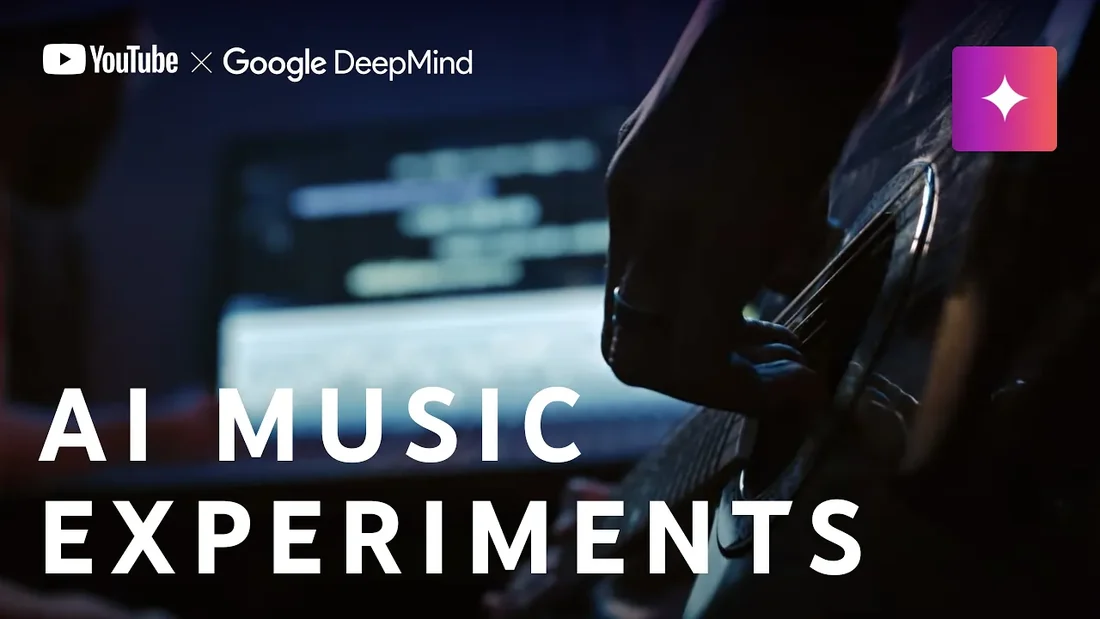
On 16 November 2023, YouTube and Google DeepMind jointly announced Dream Track, an experiment inside YouTube Shorts generating a 30-second soundtrack, complete with AI-sung vocals in the style of a participating artist, from a short text prompt. YouTube's announcement names nine artists who took part, Alec Benjamin, Charlie Puth, Charli XCX, Demi Lovato, John Legend, Papoose, Sia, T-Pain and Troye Sivan, describing them as having 'chose[n] to collaborate in this experiment', and states the feature launched to 'a small group of select US creators' rather than to everyone at once.
What the documents say
DeepMind's companion announcement names Lyria as the model behind Dream Track, its most advanced music generation system at that point, and states that 'all Lyria-generated content' carries a SynthID watermark, an inaudible signal that DeepMind says survives common edits such as MP3 compression or a tempo change, meant to let a clip's origin be checked later. Together, the two posts describe a system built on artist consent at the input stage, named performers opted in, and provenance marking at the output stage, rather than an open tool anyone's likeness could be applied to without agreement. Neither post states what Lyria was trained on beyond the participating artists' own material implied by 'style'.
Why it matters for makers
The mechanism worth naming is consent plus a technical marker, a different structure from most of the tools in this record: rather than relying on a licence buried in terms of service, YouTube's own materials frame Dream Track as opt-in at the level of the individual artist, each of whom is named. That is a higher bar than a blanket training-data licence, and it is worth noticing precisely because it is unusual, since most systems in this batch describe a dataset or a catalogue, not a named list of consenting performers. The SynthID watermark is a second, distinct mechanism: it does not establish consent, only traceability, and the two should not be treated as interchangeable safeguards.
What to check before you use it
Before assuming a similar claim about any other tool, check specifically whether the artists involved are named and described as having opted in, as they are here, rather than inferred from a dataset description. Check separately whether an output-marking technology such as a watermark is present, and understand that it addresses detection after the fact, not permission beforehand. This is an editorial distinction the two announcements support but do not spell out in those terms.
- Are the artists whose style a tool can imitate named and described as having consented, or inferred from an undisclosed dataset?
- Does an output carry a technical marker such as a watermark, and what does that marker actually prove, origin or permission?
- Is a feature framed as a limited experiment with select participants, or as a general release, and does that match how it is being used?
Dream Track's lasting relevance is as a counter-example: proof that a platform-scale generative music feature could be built around named, consenting artists rather than an undisclosed catalogue, even though that model, an opt-in list of participants, has not become the industry default.
Sources & reading trail
Names the nine consenting artists, describes opt-in participation, the 30-second limit and the limited-creator rollout.
Source published: 16 November 2023 · Retrieved: 16 September 2026
Names Lyria as the underlying model and describes SynthID watermarking applied to all Lyria-generated content.
Source published: 16 November 2023 · Retrieved: 16 September 2026
Papers, terms and official documents establish the record; the maker reading and the checks are Signal to Song editorial analysis. This retrospective draft does not imply the site published on the event date.
Continue reading
- DeepMind watermarked its own generated music, not music generally
- A provenance standard records edits, not the truth of a file
- YouTube required creators to disclose realistic synthetic media
- Browse the complete the archive
Sources & reading trail
- Behind the mic: an inside look at our AI music experiment
Source published: November 16, 2023 · Retrieved: September 16, 2026 - Transforming the future of music creation
Source published: November 16, 2023 · Retrieved: September 16, 2026
The documents above establish the record. The reading and the questions are this publication’s editorial analysis, written after the fact.
Published September 18, 2026, not on the date of the event described.