A generation metric adapted from images admits a moderate correlation
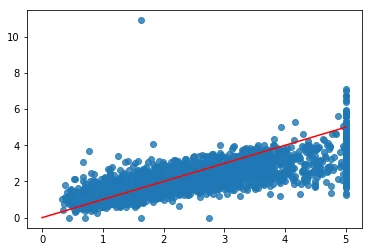
The Frechet Audio Distance paper reports a 0.52 correlation with human ratings, calling it better than SDR, not a proxy for listening.
- Historical event
- January 17, 2019
- First source published
- January 17, 2019
- Site publication
- September 18, 2026
What happened
Google researchers Kevin Kilgour, Mauricio Zuluaga, Dominik Roblek and Matthew Sharifi posted 'Fréchet Audio Distance: A Reference-Free Metric for Evaluating Music Enhancement Algorithms' to arXiv; the version examined for this record is dated 17 January 2019. The paper adapts the Fréchet Inception Distance, a metric built for scoring image-generating models, to audio, proposing it specifically for music enhancement algorithms rather than for music generation from scratch. Code implementing the metric is published in the frechet_audio_distance repository.
What the documents say
FAD compares the statistics of embeddings, produced by a pretrained audio classifier called VGGish, taken from a set of generated or enhanced clips against embeddings from a large set of clean reference music; it needs no matched pair or ground-truth version of any individual clip, unlike SDR-style metrics. The paper's own human-listening test found FAD's score correlated with human ratings of distortion at a coefficient of 0.52, ahead of SDR's 0.39 but far from a perfect match. Its own words after presenting that figure: 'Neither of the plots shows a perfect correlation.' The paper's conclusion also states the authors 'suspect' FAD may extend to generation tasks, marking that as future work rather than a tested claim in this paper.
Why it matters for makers
The mechanism, comparing distributions of learned embeddings rather than matching an output to one reference recording, is exactly why FAD later became popular for scoring generative music models with no single correct answer to compare against. But a moderate correlation coefficient means a model with a better FAD score is not guaranteed to be preferred by a human listener on any particular clip; it is a population-level statistic, useful for ranking many samples, weak as a guarantee about the one track a producer is listening to.
What to check before you use it
When a generator's marketing cites a lower FAD score against a competitor, check what reference set that FAD was computed against, since the number depends on the reference distribution chosen, not an absolute scale. Treat a FAD comparison as a coarse ranking signal, not a listening-test substitute; this is an editorial reading consistent with the paper's own moderate correlation figure and its origin as a metric built for enhancement, not generation.
- What reference audio set was the cited FAD score computed against, and is it disclosed?
- Does the marketing treat a FAD improvement as equivalent to a listening-test result the paper itself never claims?
- For your specific use case, does a population-level statistic answer the question you actually have about one track?
FAD gave generative audio research a reference-free way to rank many samples without human raters for every comparison. Its authors reported a moderate correlation with human judgement, not a proxy for a listening test, and said as much in their own conclusion.
Sources & reading trail
Defines FAD, states its 0.52 correlation with human ratings against SDR's 0.39, and scopes the metric to enhancement algorithms.
Source published: 17 January 2019 · Retrieved: 16 September 2026
Describes the VGGish-embedding, Gaussian-statistics implementation used to compute FAD.
Source published: Not established · Retrieved: 16 September 2026
Papers, terms and official documents establish the record; the maker reading and the checks are Signal to Song editorial analysis. This retrospective draft does not imply the site published on the event date.
Continue reading
- A shared dataset made separation scores comparable, not perceptual
- A neural codec's tokens explain a generator's sonic signature
- A broadcast standard specifies how to blind-test audio
- Browse the complete the archive
Sources & reading trail
- Fréchet Audio Distance: A Reference-Free Metric for Evaluating Music Enhancement Algorithms
Source published: January 17, 2019 · Retrieved: September 16, 2026 - frechet_audio_distance (Google Research)
Retrieved: September 16, 2026
The documents above establish the record. The reading and the questions are this publication’s editorial analysis, written after the fact.
Published September 18, 2026, not on the date of the event described.