PROTO trained its AI voice on consenting singers in the room
The artist's Bandcamp notes and studio page describe training the Spawn model live with volunteer singers rather than existing recordings.
- Historical event
- May 10, 2019
- Site publication
- September 18, 2026
What happened
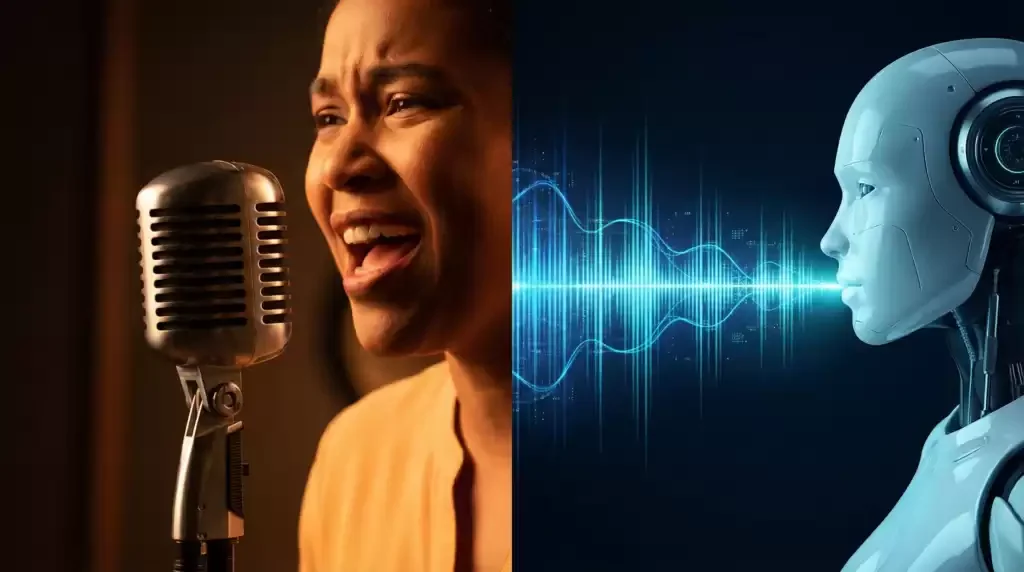
On 10 May 2019 the composer Holly Herndon released PROTO on 4AD, an album her own studio site describes as "combining electronic music, AI, and an ensemble of human and machine voices". The AI voice, called Spawn, was developed with her collaborator Mathew Dryhurst and ensemble developer Jules LaPlace. According to the album's Bandcamp page, Spawn was trained not on a static library of existing recordings but through live sessions in Berlin, where "hundreds of people were gathered to teach Spawn how to identify and reinterpret unfamiliar sounds in group call-and-response singing sessions", modelled in part on the religious gatherings of Herndon's East Tennessee upbringing.
What the documents say
The Bandcamp page names specific vocal contributors beyond the training ensemble, including Jenna Sutela, Jlin, Lily Anna Hayes and Martine Syms, and credits Herndon's own description of assembling "a contemporary ensemble of vocalists, developers, guest contributors" alongside the AI system. Herndon is quoted directly on the reasoning behind that choice of training method: "I don't want to live in a world in which humans are automated off stage. I want an A.I. to be raised to appreciate and interact with that beauty." The distinction that matters is between training data gathered with participants physically present and consenting in the room, call-and-response singing sessions, and training data assembled by scraping existing recordings without the performers' knowledge. Neither source claims Spawn was trained on any commercially released recordings, and this record does not add that claim.
Why it matters for makers
The mechanism worth naming is consent built into the collection method itself, rather than a licence obtained after the fact. A singer who attends a live call-and-response session knows their voice is being used to train a model at the moment they open their mouth; that is a materially different starting point from a voice model built from recordings gathered for another purpose entirely. For a producer or vocalist considering a similar collaboration, the practical question is not only whether a licence exists but when in the process consent was actually obtained.
What to check before you use it
Before contributing your voice, or someone else's, to a voice model, check whether the training method itself required active, present participation, as PROTO's account describes, or whether it relied on separately licensing existing recordings after they were made. The two are not equivalent even when both are technically authorised, since a session participant knows the specific use their voice is being put to. This is an editorial distinction Herndon's own materials illustrate but do not state as a general rule.
- Did the people whose voices trained this model know at the time that a model was the purpose?
- Is the model credited as a collaborator, and are the human ensemble members it was trained with named?
- Does the finished recording disclose which sounds came from the trained model versus the human performers?
PROTO's account is useful precisely because it separates two questions a maker should keep apart: whether a voice model is technically licensed, and whether the people who shaped it knew, in the room, what they were shaping.
Sources & reading trail
Artist's own studio archive framing PROTO as combining electronic music, AI and an ensemble of human and machine voices, 2019, 4AD.
Source published: Not established · Retrieved: 16 September 2026
Confirms release date and describes the live call-and-response training of Spawn, named collaborators and vocal contributors.
Source published: Not established · Retrieved: 16 September 2026
Papers, terms and official documents establish the record; the maker reading and the checks are Signal to Song editorial analysis. This retrospective draft does not imply the site published on the event date.
Continue reading
- A voice clone’s consent has to satisfy a statute and a platform
- Open models show two ways to disclose training data
- Browse the complete the archive
Sources & reading trail
- PROTO
Retrieved: September 16, 2026 - PROTO, by Holly Herndon
Retrieved: September 16, 2026
The documents above establish the record. The reading and the questions are this publication’s editorial analysis, written after the fact.
Published September 18, 2026, not on the date of the event described.