LANDR turned mastering into an automated web service in 2014
The company's own pages date its automated mastering launch and describe the analysis it says it runs on every uploaded track.
- Site publication
- September 18, 2026
What happened
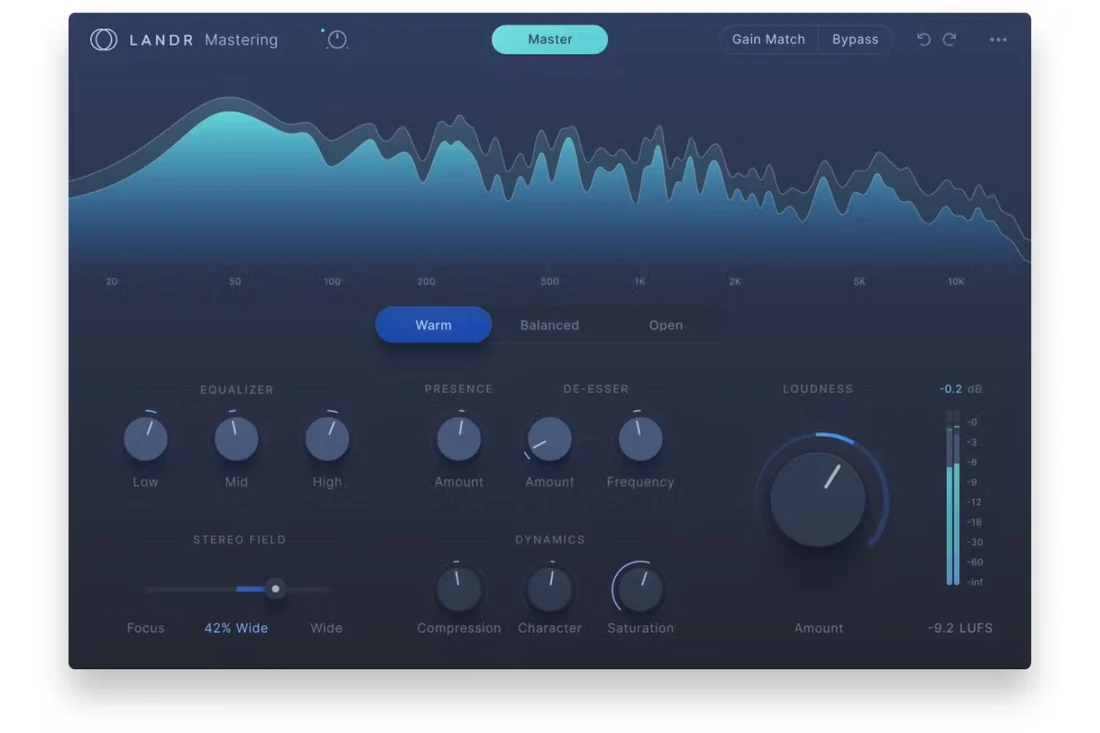
LANDR's own about page states it 'launched in 2014,' the year the Montreal company began offering mastering, the final loudness and tonal-balance pass applied to a mix before release, as an automated web service rather than a session with a human mastering engineer. Where a mastering engineer listens to a mix and makes judgment calls about loudness, tone and dynamics, LANDR's about page and its mastering product page, both retrieved 16 September 2026, describe a service a musician uploads a mix to and receives a processed file back from, with no named engineer involved.
What the documents say
The mastering page states the service 'analyzes aspects of an entire track or album and makes the changes necessary to produce a clear, loud and polished track,' applying 'light EQ, compression, stereo imaging, and other changes.' It describes the underlying method as pattern-based rather than preset-based: 'our online mastering engine uses AI to pull knowledge from thousands of mastered songs to offer a unique mastering chain for every track,' a claim the current homepage extends by describing 'the world's best AI mastering' as one that 'never uses presets and has over a decade of AI training from pro audio engineers.' None of these pages publishes the training data or a technical description of the model; what they establish is a claimed method and a claimed non-method, not a verifiable account of the system itself.
Why it matters for makers
The distinction worth naming is between a mastering measurement and a mastering decision. Loudness, stereo width and tonal balance can be measured and adjusted automatically toward a target; whether a given adjustment serves the song is a judgment about taste, genre convention and the mix's specific problems, which a system trained on average outcomes cannot make for this specific song. A producer who submits a mix to an automated service is accepting the first kind of adjustment without necessarily getting the second, and the marketing language, a unique chain for every track, does not resolve which kind of decision produced any specific result.
What to check before you use it
Before accepting an automated master as final, a maker can compare it against the original mix on the same playback system, checking specifically for over-compression, tonal shifts that flatten a deliberate mix choice, and loudness pushed past the point where dynamics collapse, since the service's own language names loudness and polish as explicit goals. This is an editorial listening checklist, not a claim about LANDR's or any competitor's internal processing.
- Does the automated master preserve the dynamic contrast that was a deliberate choice in the mix?
- Would a genre-appropriate reference track suggest a different tonal balance than the one returned?
- Am I choosing an automated master because it suits this song, or because it is faster than booking an engineer?
An automated mastering service answers a measurable question quickly; the documents describe what it measures and adjusts, not whether the result is the right call for a particular record, and that second judgment is still the maker's to make.
Sources & reading trail
States LANDR launched in 2014.
Source published: Not established · Retrieved: 16 September 2026
Describes the automated mastering process: analysis of the whole track and application of EQ, compression and stereo imaging.
Source published: Not established · Retrieved: 16 September 2026
States the mastering engine never uses presets and has over a decade of training from professional audio engineers.
Source published: Not established · Retrieved: 16 September 2026
Papers, terms and official documents establish the record; the maker reading and the checks are Signal to Song editorial analysis. This retrospective draft does not imply the site published on the event date.
Continue reading
- Ozone's assistant still leaves the final call to the engineer
- A mastering assistant matches a reference, not your taste
- Browse the complete the archive
Sources & reading trail
- About LANDR
Retrieved: September 16, 2026 - LANDR Mastering
Retrieved: September 16, 2026 - LANDR homepage
Retrieved: September 16, 2026
The documents above establish the record. The reading and the questions are this publication’s editorial analysis, written after the fact.
Published September 18, 2026, not on the date of the event described.