A mastering assistant matches a reference, not your taste
iZotope’s and LANDR’s own descriptions of reference matching, read against Spotify’s loudness target, show where the tool’s job ends.
- Site publication
- September 18, 2026
What happened
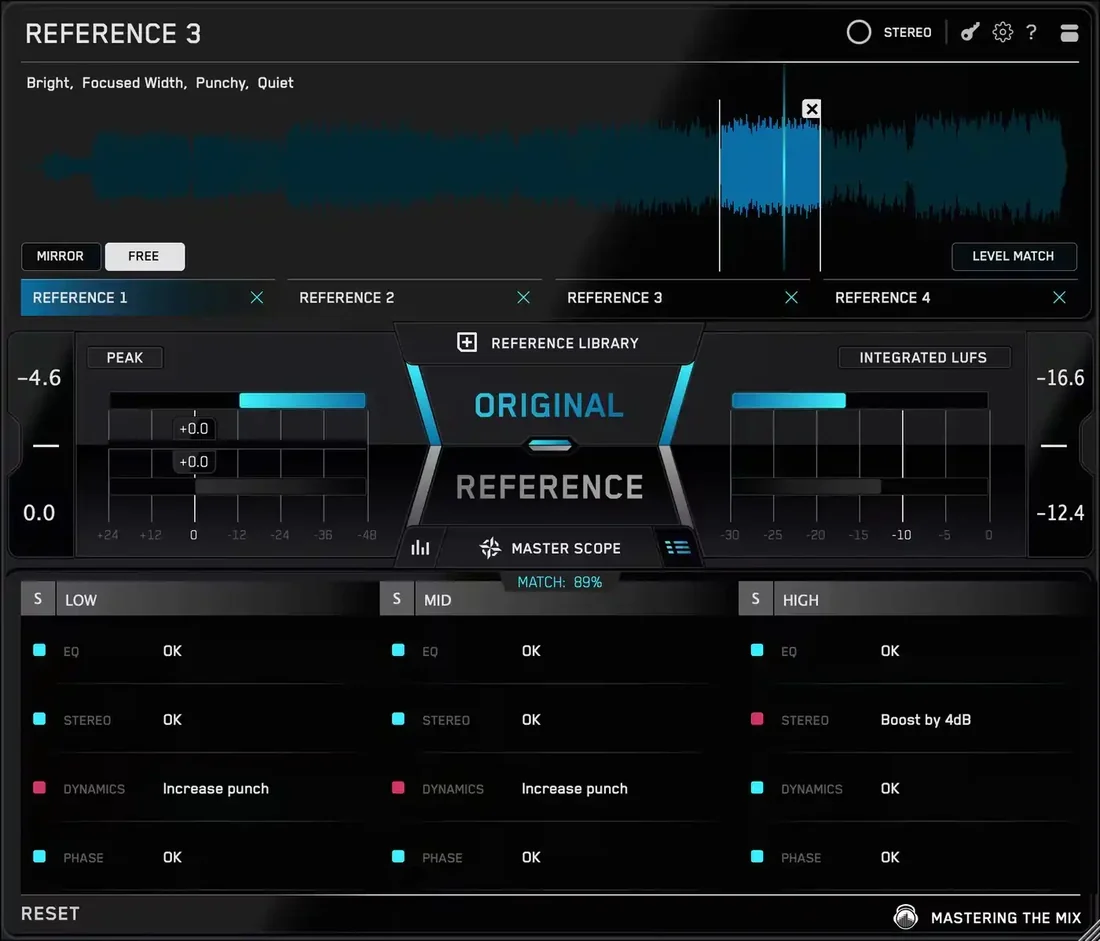
Two widely used mastering assistants describe, in current product pages retrieved 16 September 2026, a similar mechanism: analyse a reference – a library of professional tracks or a file the user uploads – and generate a processing chain moving the user’s mix toward that reference’s sound. iZotope’s Ozone page describes Master Assistant as built from “the analysis of thousands of professional tracks” and offers a Custom flow where a user can “set a LUFS target” or “pick from dozens of genre profiles.” LANDR’s page offers “reference mastering,” where a user can “upload a reference track for analysis and get an AI reference master of your track with a similar sound profile.”
What the documents say
Both companies frame the assistant as a starting point rather than a final decision. iZotope’s product page describes Master Assistant as a “creative co-pilot,” with a newer Custom flow letting an engineer “call the shots” over the processing it proposes. LANDR’s mastering page states its chain is trained on “the adjustments human mastering engineers make,” which means it reproduces a statistical pattern in how engineers have mastered other material, not an evaluation of this particular song’s intent. A third document supplies an external check on where “loud” stops being useful: Spotify’s loudness-normalization article states the platform targets -14 dB LUFS integrated and recommends keeping true peak below -1 dB, adding that louder masters are simply turned down on playback rather than rewarded.
Why it matters for makers
The mechanism worth naming is that a reference is a taste decision wearing a technical costume. Choosing which professional tracks, genre profile or uploaded file a tool matches against is an artistic choice with real consequences for tone, width and dynamics – the tool only automates getting closer to whatever target was selected. A producer who lets a genre preset choose the reference is delegating a creative decision, not avoiding one. And because a hotter master is not louder on Spotify’s playback, chasing loudness through an assistant’s default settings buys distortion risk without a perceptual reward.
What to check before you use it
This is editorial guidance drawn from the cited pages, not a claim about how any specific master will sound. Check which reference or genre profile a preset draws on before accepting its output, since that choice does more creative work than the interface suggests. Set an explicit LUFS and true-peak target consistent with where the track will be heard, rather than accepting a default tuned for generic loudness. Compare the assisted master against an unprocessed mix by ear, for whether width and transients still serve the song rather than only the target curve.
- What reference or genre profile is this assistant actually matching against?
- Does the chosen loudness target serve the platform this track will be heard on?
- Would a different, deliberately chosen reference change what “finished” sounds like here?
An assistant can shorten the distance to a competent, familiar-sounding master, but it cannot choose which familiar sound is right for a particular song – that choice remains the producer’s, made before the tool is opened rather than accepted from its defaults afterward.
Sources & reading trail
Describes Master Assistant's reference-based preset generation and the Custom flow's LUFS-target and genre-profile controls.
Source published: Not established · Retrieved: 16 September 2026
Describes LANDR's reference-upload mastering and states its processing chain is trained on human mastering engineers' adjustments.
Source published: Not established · Retrieved: 16 September 2026
States Spotify's -14 LUFS integrated target and -1 dB true-peak recommendation, and that louder masters are turned down on playback.
Source published: Not established · Retrieved: 16 September 2026
Papers, terms and official documents establish the record; the maker reading and the checks are Signal to Song editorial analysis. This retrospective draft does not imply the site published on the event date.
Continue reading
- Ozone's assistant still leaves the final call to the engineer
- Streaming loudness targets sit on top of an ITU measurement standard
- Browse the complete the archive
Sources & reading trail
- Ozone 12 | Mastering Software & Plugin
Retrieved: September 16, 2026 - AI Mastering Online
Retrieved: September 16, 2026 - Loudness normalization
Retrieved: September 16, 2026
The documents above establish the record. The reading and the questions are this publication’s editorial analysis, written after the fact.
Published September 18, 2026, not on the date of the event described.