Streaming loudness targets sit on top of an ITU measurement standard
Spotify's -14 LUFS policy uses the ITU's BS.1770 algorithm, but the standard sets no target level itself.
- Site publication
- September 18, 2026
What happened
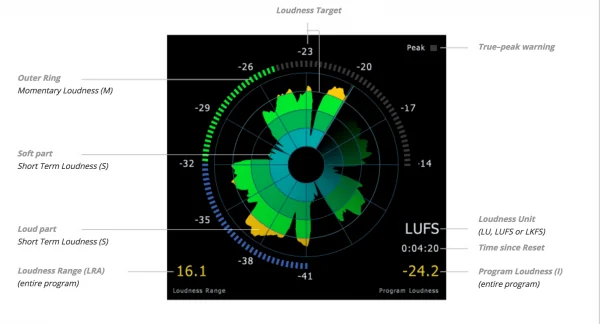
Spotify turns tracks up or down on playback to match a target loudness rather than playing masters at their delivered level. Its artist support article, as retrieved on 16 September 2026, states the target is '-14 dB LUFS, according to the ITU 1770 standard'. LUFS, loudness units relative to full scale, is measured using an algorithm defined by the International Telecommunication Union in Recommendation BS.1770, first issued in 2006 and now at its fifth revision, dated November 2023, titled 'Algorithms to measure audio programme loudness and true-peak audio level'.
What the documents say
Spotify's article states normalisation applies gain during playback without altering the stored file: masters above the target receive negative gain, quieter masters receive positive gain within limits meant to avoid distortion. It advises mastering to '-14dB integrated LUFS' with true peak kept below '-1dB TP' for typical delivery, or below '-2dB' for louder masters, to limit distortion introduced when the file is transcoded for streaming. BS.1770 itself defines only the measurement algorithm, an ITU-R Recommendation, not a target level; the -14 LUFS figure is Spotify's own playback policy, not a value the ITU standard mandates.
Why it matters for makers
The mechanism separates two eras of mastering practice: before playback normalisation, a louder master reached a listener's ear louder than a quieter one on the same system, rewarding heavy limiting. Once a platform measures loudness with an ITU-defined algorithm and turns everything to the same target, a master delivered several decibels hot is simply turned down further, netting no perceived loudness advantage while still carrying whatever dynamic-range cost the limiting added. The competitive reason to master loud past the target effectively disappears under this specific playback policy.
What to check before you use it
Check your streaming distributor's stated LUFS target rather than assuming every platform uses Spotify's exact -14 figure, since platform policies vary and are not fixed by the ITU document itself. Measure your own master's integrated LUFS and true peak before delivery using a metering tool that implements BS.1770, rather than judging loudness by ear against a reference track played at an uncontrolled level, which is an editorial recommendation given how directly the standard and the policy interact.
- What integrated LUFS target does your specific distribution platform state, and does it match the figure you mastered to?
- Does your true peak stay within the platform's stated headroom once the file is transcoded for streaming?
- Is a loud, heavily limited master buying you anything on a platform that normalises playback loudness anyway?
An ITU algorithm measures loudness the same way everywhere; a platform's chosen target level is a separate policy choice built on top of it. Reading the two documents together explains why mastering loud stopped being a competitive advantage on normalised platforms.
Sources & reading trail
States Spotify's -14 dB LUFS playback target, how gain is applied, and mastering true-peak advice.
Source published: Not established · Retrieved: 16 September 2026
Defines the loudness-measurement algorithm and lists its revision history from 2006 to the current 2023 edition.
Source published: 1 November 2023 · Retrieved: 16 September 2026
Papers, terms and official documents establish the record; the maker reading and the checks are Signal to Song editorial analysis. This retrospective draft does not imply the site published on the event date.
Continue reading
- LANDR turned mastering into an automated web service in 2014
- Ozone's assistant still leaves the final call to the engineer
- Browse the complete the archive
Sources & reading trail
- Loudness normalization
Retrieved: September 16, 2026 - Recommendation ITU-R BS.1770: Algorithms to measure audio programme loudness and true-peak audio level
Source published: November 1, 2023 · Retrieved: September 16, 2026
The documents above establish the record. The reading and the questions are this publication’s editorial analysis, written after the fact.
Published September 18, 2026, not on the date of the event described.