Treat the carrier as evidence
An archive recording is more than the music heard after cleanup. Tape speed variation, surface noise, a damaged splice, handwritten label or room sound can be evidence of how the object was made and used. Preservation therefore begins by describing and stabilising the carrier, not by immediately applying noise reduction. IASA's audio-preservation guidance addresses signal extraction, metadata, preservation targets and access as connected parts of one process.
Photograph labels and container notes where appropriate; assign a stable identifier; record the carrier format, condition, playback equipment and operator. If a transfer must be paused because the object is fragile, write that down. The record of restraint can be as important as a successful listening file.
Make an original transfer and a derivative
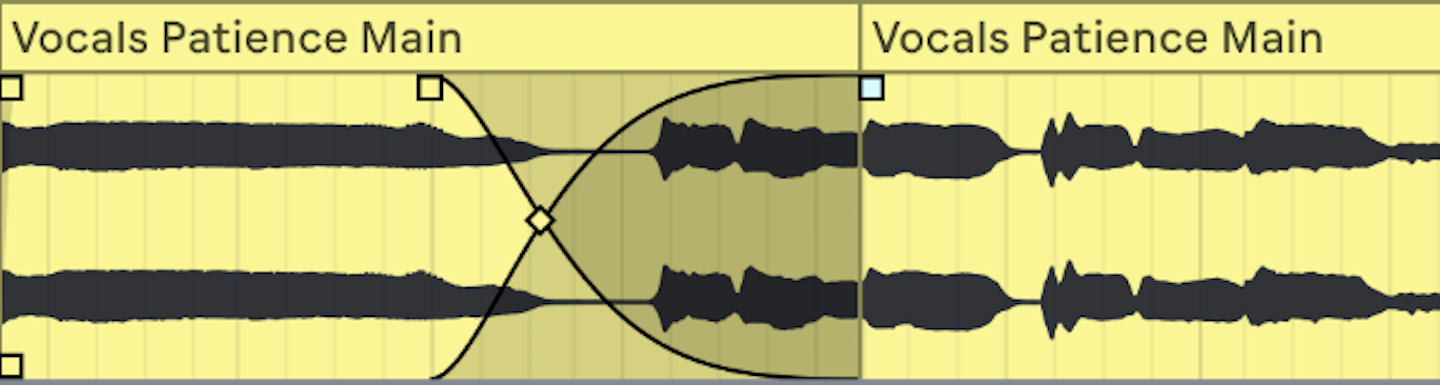
Keep the first preservation transfer distinct from any restored listening version. Name files so their relationship is obvious: an original digital transfer, a working restoration derivative and an access copy. Do not overwrite the first transfer with a de-clicked, re-equalised or re-timed version. A restoration may be valuable for access, but it is an interpretation of the transferred signal.
The Library of Congress notes that digital provenance can include playback equipment, workstation, settings, transfer time and technician identity, alongside notes about anomalies. These details let a future archivist understand why one file contains a dropout or why a later derivative sounds smoother. They make the work reproducible in principle, even if the original equipment is no longer available.
Document every intervention
For each derivative, log software or hardware, version, settings, date, operator, reason and audible consequence. Write ‘reduced steady hiss for listening copy’ rather than ‘improved audio.’ Avoid claims that a repair recovered what was never present. If a missing word is reconstructed, that is a new derivative with a particularly important disclosure, not a recovered original.
A simple table works: source identifier, parent file, operation, parameters, operator, purpose and checksum. Keep the record near the files and in a format that can be read without the restoration software. Checksums do not prove historical truth; they help detect whether a stored digital file has changed.
Separate preservation from release permission
Digitising a recording does not automatically authorise public sharing, commercial use or a new arrangement. The project may preserve one copy, provide restricted access to another and need separate clearance for public release. Do not let a technically careful transfer be misrepresented as a rights determination.
A proposed exercise is to create a mock provenance chain for a rights-cleared personal recording. It teaches the difference between source, derivative and access copy without asking anyone to alter a vulnerable or third-party archive object. The goal is faithful history plus useful access, not an artificially pristine past.
Continue in Listening & research, or Now and Then used separation, not generation, to finish a demo.
Evidence & further reading
Go to the source.
Primary references checked 19 September 2026. Practical exercises are editorial guidance, not reported product tests.
- Guidelines on the Production and Preservation of Digital Audio Objects ↗
Primary preservation guidance covers metadata, signal extraction, archival storage and access.
International Association of Sound and Audiovisual Archives · 2009 edition; exact publication day not established · Accessed 2026-09-19 - The State of Recorded Sound Preservation in the United States ↗
Primary report describes digital-provenance information for audio capture and transfer.
Library of Congress · 2010 report; exact publication day not established · Accessed 2026-09-19 - National Recording Preservation Plan ↗
Primary plan explains the role of technical metadata in tracking provenance during reformatting.
Library of Congress · 2013 plan; exact publication day not established · Accessed 2026-09-19