Live 12 put MIDI generators and a neural sound search in the browser
Ableton's release notes describe MIDI Transformations, Generators and a neural-network Similarity Search shipped with Live 12.
- Historical event
- March 1, 2024
- Site publication
- September 18, 2026
What happened
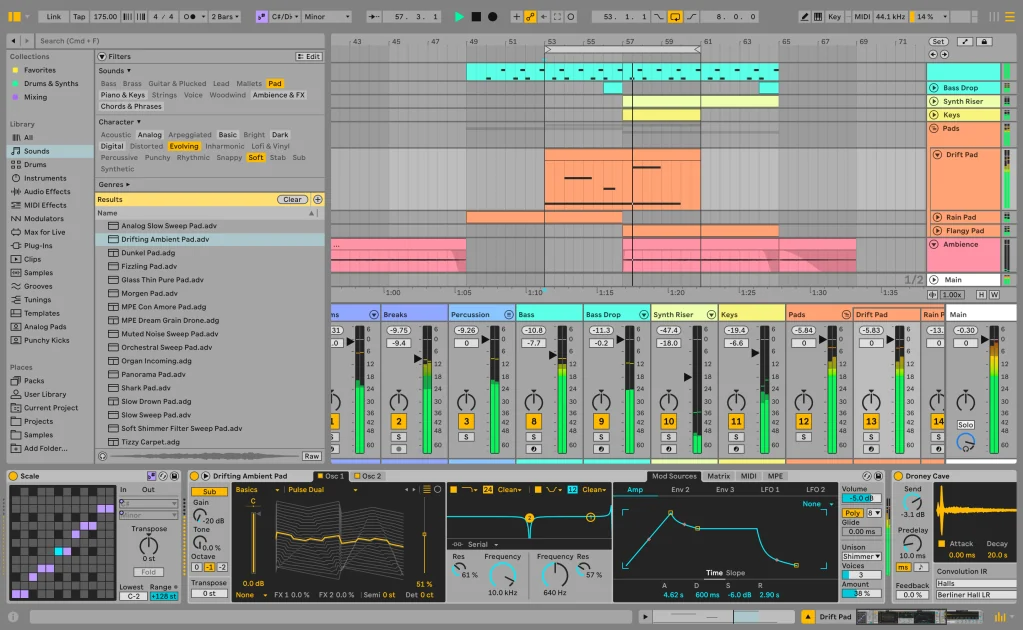
In March 2024 Ableton shipped Live 12, the current major version of its Live DAW. The company's release notes list version 12.0 followed by a 12.0.1 patch dated 14 March 2024, which places the initial release in early March 2024; the notes do not print an exact day for 12.0 itself, so this record uses the month only. The 12.0 notes introduce, among other changes, a new 'MIDI Tools' browser filter group, a scale-aware workflow, and a redesigned browser with tags and filters.
What the documents say
The release notes state that Live 12 'introduced MIDI Tools, a set of MIDI Transformations and Generators which can be used to automatically shape and create MIDI notes in creative and surprising ways', listing named tools such as Arpeggiate, Stacks and Seed, each with adjustable parameters rather than a single generate button. The notes separately describe 'Similarity Search', which 'can be used to find sounds similar to a reference file and works with audio samples, instrument presets, and drum presets'. The current product page, retrieved 16 September 2026, adds that this search works 'with the help of a neural network', naming the mechanism the release notes leave implicit.
Why it matters for makers
Both features generate starting material inside an existing session rather than a finished track outside one. A MIDI Generator such as Stacks proposes chords 'based on various chord rules that can be further tweaked and inverted', keeping the harmonic decision editable as notes on a clip, not committed audio. Similarity Search changes browsing, not composition: it retrieves sounds already in a library or pack by acoustic resemblance to a reference, which speeds up finding a replacement snare or pad but does not create a new one. That distinction matters when comparing a DAW's built-in tools to a text-to-song generator: every output here is a manipulable object inside the same session the producer is already arranging.
What to check before you use it
Check which MIDI Tool produced a given part, since Transformations reshape existing notes while Generators create new ones from constraints, and the two leave different amounts of your original material intact. Confirm whether Similarity Search is drawing only from content you have rights to use, since it can surface matches from installed Packs with their own licence terms. Treat a generated chord or rhythm idea as a sketch to edit, consistent with the release notes' own framing of adjustable parameters rather than fixed output. This is editorial reading beyond the documentation's own wording.
- Was this part built by a Transformation acting on your notes, or a Generator creating new ones?
- Does the sound Similarity Search returned come from content you're licensed to use in this project?
- Have you actually adjusted the tool's parameters, or kept the first result it offered?
Live 12's generators sit inside the same clip and track structure as everything else in the session, which is the practical difference from a standalone generator: the arrangement stays the producer's to keep editing after the tool has made its suggestion.
Sources & reading trail
Documents MIDI Tools (Transformations and Generators) and Similarity Search as introduced in Live 12.0, with a 12.0.1 patch dated 14 March 2024.
Source published: Not established · Retrieved: 16 September 2026
Current product page naming the neural-network mechanism behind Similarity Search.
Source published: Not established · Retrieved: 16 September 2026
Papers, terms and official documents establish the record; the maker reading and the checks are Signal to Song editorial analysis. This retrospective draft does not imply the site published on the event date.
Continue reading
- The Copyright Office found prompts do not control output
- A 1983 protocol let rival instrument makers speak one language
- Browse the complete the archive
Sources & reading trail
- Live 12 Release Notes
Retrieved: September 16, 2026 - Live
Retrieved: September 16, 2026
The documents above establish the record. The reading and the questions are this publication’s editorial analysis, written after the fact.
Published September 18, 2026, not on the date of the event described.