A character licence, not a contract, built Miku's fan economy
Crypton's own licence and concert pages describe a dual-licence system that has let fans write Hatsune Miku's catalogue since 2007.
- Site publication
- September 18, 2026
What happened
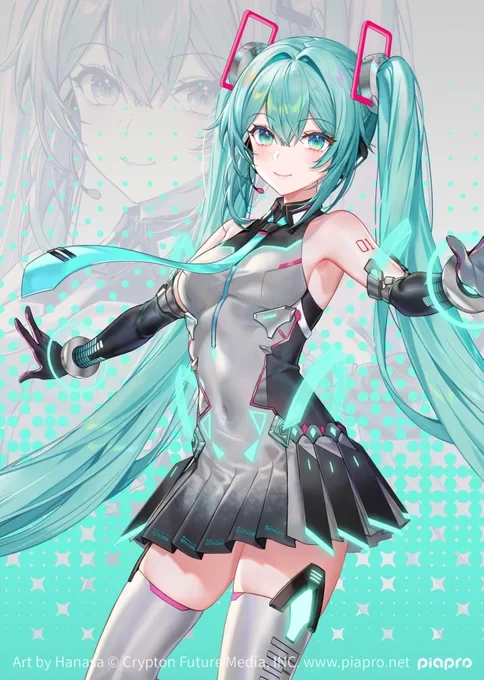
Crypton Future Media's synthetic singer Hatsune Miku, built on Yamaha's VOCALOID engine, is described on the company's own product page, as it reads on 16 September 2026, as having grown "from vocal synthesizer product to beloved collaboratively constructed cyber celebrity," a character whose songs are written almost entirely by independent fans rather than the company itself. The company's own licensing page states it publicly announced the Piapro Character License, a bespoke permission structure for fan use of Miku and its other characters, in 2009. That fan output is celebrated annually at Magical Mirai, a concert series the event's own site says "began in 2013" and continues to run every year since.
What the documents say
Crypton's licensing page describes a dual structure: characters are covered by both a Creative Commons CC BY-NC licence, adopted in 2012 "to support open creative activities all over the world," and the original Piapro Character License simultaneously, letting a creator "use them in compliance with either license as you wish." The company explains the split: it found it "difficult to translate [the PCL] and adapt it to other languages and, in particular, other cultures," so international creators are pointed toward the more familiar Creative Commons terms instead. The product page states the character has appeared in "over 100,000 songs" and drawn "over 170,000 YouTube uploads and 1,000,000 artworks," figures the company presents as its own tally, not an audited count.
Why it matters for makers
The mechanism worth naming is a licence granted in advance to an unbounded, anonymous public, rather than a contract negotiated per use. A fan does not ask Crypton's permission before writing a Miku song; the permission already exists in the published terms, non-commercial by default under the Creative Commons option. That is a different consent model from a voice-cloning service requiring the performer, or their estate, to license each use individually. For a maker considering a synthetic voice, the comparison shows consent can be designed as an open, standing licence rather than a one-off negotiation, provided the rights holder will grant it that broadly.
What to check before you use it
Before using Hatsune Miku or a similarly licensed character commercially, check which of the two licences actually permits the intended use, since the Creative Commons option is explicitly non-commercial and the Piapro Character License's full terms require, in Crypton's own words, "accurate understandings of the PCL's original Japanese text." A maker outside Japan relying on an English summary should not assume it captures every restriction the original imposes. This is an editorial caution drawn from the page's own wording, not a claim that either licence is unclear on its own terms.
- Does the intended use fall under the non-commercial Creative Commons option, or does it require the separate Piapro Character License?
- Has the licence text actually been read in its original language, where the company itself says nuance lives?
- Would a similar standing licence be available from the rights holder for a different synthetic voice, or does every use require individual negotiation?
Miku's licensing pages describe consent granted upfront, at scale, rather than negotiated per song, and a concert series now in its second decade is the visible result of fans building on that standing permission rather than seeking it new each time.
Sources & reading trail
Crypton's own description of the Piapro Character License, its 2009 announcement and its dual-licence relationship with Creative Commons.
Source published: Not established · Retrieved: 16 September 2026
Crypton's own product page: Miku's history, the 2012 adoption of CC BY-NC, and the company's own usage figures.
Source published: Not established · Retrieved: 16 September 2026
Confirms the concert series began in 2013 and its stated purpose of celebrating fan creation.
Source published: Not established · Retrieved: 16 September 2026
Papers, terms and official documents establish the record; the maker reading and the checks are Signal to Song editorial analysis. This retrospective draft does not imply the site published on the event date.
Continue reading
- Hatsune Miku launched as a commercial voice bank with a licence
- ElevenLabs sells generated tracks it does not guarantee are unique
- A voice clone’s consent has to satisfy a statute and a platform
- Browse the complete the archive
Sources & reading trail
- Piapro Character License — For Creators
Retrieved: September 16, 2026 - Hatsune Miku V4X (Character Vocal Series 01)
Retrieved: September 16, 2026 - Hatsune Miku "Magical Mirai"
Retrieved: September 16, 2026
The documents above establish the record. The reading and the questions are this publication’s editorial analysis, written after the fact.
Published September 18, 2026, not on the date of the event described.