An orchestra recorded a score its computer wrote from scratch
Melomics' own pages date the 2011 chamber premiere and the 2012 London Symphony Orchestra recording of computer-composed scores.
- Historical event
- April 13, 2012
- First source published
- April 16, 2012
- Site publication
- September 18, 2026
What happened
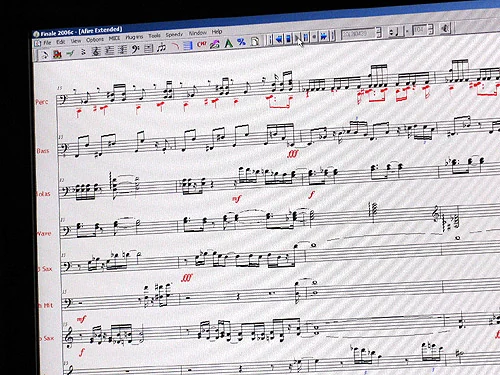
On 13 April 2012, musicians from the London Symphony Orchestra recorded a piece called Transits at Angel Recording Studios in London, conducted by Borja Quintas. The label's own contemporaneous report, dated 16 April 2012, describes it as the first time an orchestra had recorded a work generated by a computer system, named Iamus, with what the label calls no human intervention in the composition. Iamus was not new that day: the label's Hello World! page records an earlier, smaller premiere on 15 October 2011 at the Keroxen festival in Tenerife, where a clarinet, violin and piano trio performed what the label calls the first score written entirely by a computer in standard musical notation.
What the documents say
Melomics, the University of Málaga research project behind Iamus, describes its method on its own project page through project lead Francisco J. Vico: a "biomimetic approach" in which each composition develops from an encoded "genome" and evolves toward complexity, an approach the page calls "evo-devo". The label's report on the LSO session interviews Lennox Mackenzie, the orchestra's chairman and sub-concertmaster at the time, who called the score "the first time that the LSO has played a piece of music actually written by a computer" and, asked whether it could pass as human work, answered "I think it could be written by a human... it reminds me a little Varese or maybe Frank Zappa". That is one player's impression, offered by the label as evidence of quality; it is not a controlled listening test, and the label's materials do not claim one was run.
Why it matters for makers
The distinction worth keeping is between a premiere and a claim of general capability. A chamber trio playing a short piece, and a full orchestra recording a score in a professional studio, are different tests of whether generated notation actually works as playable music; Melomics reached the harder test in April 2012, five months after the first. For anyone evaluating a generative system's claims today, the same distinction applies: a demo performed by the system's own team proves less than an unrelated ensemble successfully sight-reading and recording the output.
What to check before you use it
Before treating a favourable musician's reaction as proof a generated score is playable, check who performed it, under what conditions, and whether the take required correction or editing that the announcement omits. Melomics' own report names the conductor and studio but does not describe how much rehearsal or adjustment the score needed. This is an editorial caution, not a gap either source admits to.
- Was the performance by an independent ensemble or by people connected to the system's developers?
- Did the generated notation require human correction before or during the session, and is that disclosed anywhere?
- Is a musician's subjective impression being presented as a substitute for a structured listening comparison?
Melomics' own record of Iamus is most useful as a marker of what a fully notated, computer-generated orchestral score could do in 2012 once a real orchestra sat down to play it, not as proof that the question of what makes music sound human-made was settled that day.
Sources & reading trail
Project lead's own description of the biomimetic, genome-based composition method behind Iamus.
Source published: Not established · Retrieved: 16 September 2026
Dates and names performers of the first chamber premiere of a fully computer-written score.
Source published: Not established · Retrieved: 16 September 2026
Contemporaneous label report on the LSO recording session, with a direct quote from LSO chairman Lennox Mackenzie.
Source published: 16 April 2012 · Retrieved: 16 September 2026
Papers, terms and official documents establish the record; the maker reading and the checks are Signal to Song editorial analysis. This retrospective draft does not imply the site published on the event date.
Continue reading
- A composer coded recombination decades before neural models
- Aiva makes full copyright depend on the subscription tier
- A broadcast standard specifies how to blind-test audio
- Browse the complete the archive
Sources & reading trail
- Melomics Records – Iamus
Retrieved: September 16, 2026 - Melomics Records – Hello World!
Retrieved: September 16, 2026 - Recording in London of “Transits” with the LSO
Source published: April 16, 2012 · Retrieved: September 16, 2026
The documents above establish the record. The reading and the questions are this publication’s editorial analysis, written after the fact.
Published September 18, 2026, not on the date of the event described.