An open-source voice cloner ships with no consent gate at all
The RVC voice-conversion project is MIT-licensed, and its own disclaimer puts all legal responsibility for cloned voices on the user.
- Site publication
- September 18, 2026
What happened
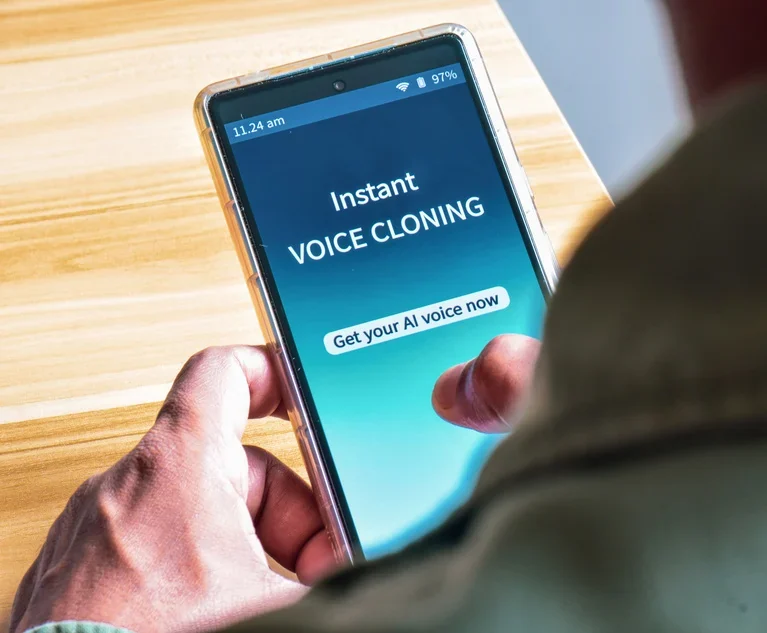
Retrieval-based Voice Conversion WebUI, known as RVC, is an open-source voice-conversion framework first published in 2023 and still actively maintained, as retrieved on 16 September 2026. Unlike Kits AI or Voice-Swap, it is not a hosted service with a library of artist-approved voices; it is code anyone can download and run locally to train a voice-conversion model from as little as ten minutes of audio, then convert other recordings into that voice. Because it runs on a user's own machine, no platform sits between the software and whatever voice the user chooses to train it on.
What the documents say
The project is released under the MIT Licence, which grants free use, modification and redistribution and states the software is provided 'without any warranty of any kind' and that the authors bear no liability 'arising from, out of or in connection with the software or the use or other dealings in the software'. A separate document in the repository, titled in Chinese as the MIT Licence and related referenced-library licences, goes further than the standard MIT text: it states the authors have no control over the software and that whoever uses it, and whoever distributes sound exported by it, bears full responsibility themselves, and that anyone who does not accept that condition may not use or reference the code. The project's README documents the technical method but contains no consent requirement, no authorisation check and no restriction on whose voice a user trains the model on.
Why it matters for makers
The mechanism to name is the absence of a gate, not the presence of a permissive one. A hosted service like Kits AI can refuse a request, log a consent record, or terminate an account; RVC, running locally, has no equivalent checkpoint because no service sits in the loop to enforce one. The legal exposure for training a model on someone else's voice without authorisation does not disappear because the tool is free and open — it simply moves entirely onto the person running it, exactly as the repository's own disclaimer states.
What to check before you use it
Before training an RVC model on a voice that is not the maker's own, obtain the same kind of written consent a hosted service would otherwise document, since no software-level check will do it automatically; keep that consent alongside project files as evidence; and treat the MIT licence's liability waiver as protecting the software's authors, not the person who trains and distributes a model built with it.
- Whose voice is the training data, and is there written consent for this specific use?
- If distributing the trained model itself, does that go further than the licence anticipates?
- Would a hosted service with an approval step have refused this particular use?
Open tools make consent a matter of individual discipline rather than platform policy, and RVC's own disclaimer is unusually direct about saying so; the absence of a gate is a design choice with legal consequences the software explicitly declines to carry.
Sources & reading trail
The project's own README describing the voice-conversion method, with no consent or authorisation requirement stated.
Source published: Not established · Retrieved: 16 September 2026
The MIT licence text granting unrestricted use and disclaiming warranty and liability for the software's authors.
Source published: Not established · Retrieved: 16 September 2026
The repository's own disclaimer placing full responsibility for use and distributed output on the user, not the authors.
Source published: Not established · Retrieved: 16 September 2026
Papers, terms and official documents establish the record; the maker reading and the checks are Signal to Song editorial analysis. This retrospective draft does not imply the site published on the event date.
Continue reading
- Two voice-conversion services now publish artist consent as a feature
- Get a license or do not sample, a court held in 2005
- Open models show two ways to disclose training data
- Browse the complete the archive
Sources & reading trail
- Retrieval-based-Voice-Conversion-WebUI (README)
Retrieved: September 16, 2026 - RVC-Project LICENSE (MIT)
Retrieved: September 16, 2026 - MIT License and related referenced-library licences
Retrieved: September 16, 2026
The documents above establish the record. The reading and the questions are this publication’s editorial analysis, written after the fact.
Published September 18, 2026, not on the date of the event described.